

From Trash to Treasure: The Art of Upcycling in Mixed Media
- Nicaela Arts and Crafts
- Mar 3
- 4 min read
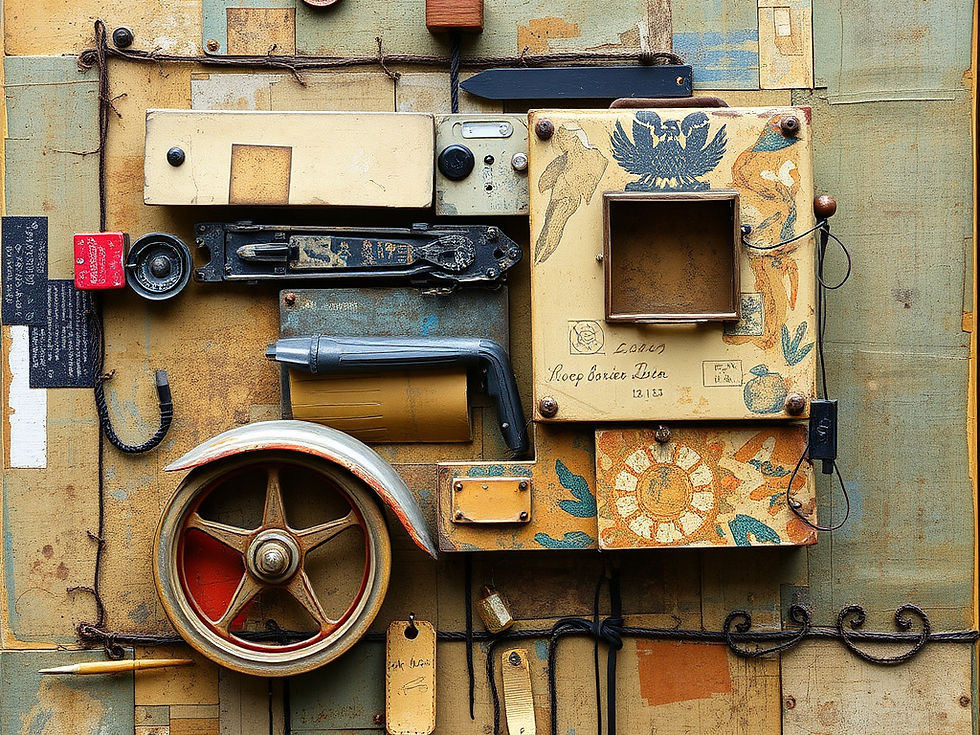
Have you ever looked at a discarded cardboard box, a handful of rusty washers, or a stack of old magazines and seen potential rather than garbage? If so, you might already be thinking like an upcycling artist. Upcycling isn't just a trendy buzzword for sustainability; it is a vibrant, challenging, and deeply rewarding corner of the mixed media art world. It pushes you to find beauty in the broken and function in the forgotten.
This post explores the fascinating world of upcycled mixed media art. We will look at why this medium is gaining traction, how to start collecting your materials without becoming a hoarder, and specific techniques to transform everyday waste into stunning gallery-worthy pieces.
Why Upcycling is More Than Just "Green" Art
Creating art from recycled materials often gets pigeonholed as a purely environmental statement. While reducing waste is a fantastic benefit, the artistic merit goes much deeper.
The Constraint of Materials
When you buy a blank canvas and a tube of paint, the possibilities are infinite. Sometimes, that infinite choice is paralyzing. With upcycling, the material dictates the direction. A piece of driftwood has a specific curve that might suggest a bird's wing. A circuit board has a geometric pattern that demands a futuristic cityscape. These constraints actually fuel creativity, forcing you to solve visual puzzles you wouldn't encounter with traditional supplies.
Texture and History
New materials are clean, sterile, and uniform. Trash has a history. A weathered ticket stub from 1950 carries a story. A piece of rusted metal has a texture that no amount of acrylic medium can perfectly replicate. By using these items, you are layering narratives—the story of the object's original purpose and the new story you are telling through your art.
The Hunter-Gatherer Phase: Sourcing Your Supplies
The first step in upcycled mixed media is gathering your palette. However, there is a fine line between collecting art supplies and cluttering your home.
Curating vs. Hoarding
The key is curation. Don't keep everything. Set specific parameters for what you collect based on color, texture, or material type. For example, you might decide to only collect blue plastics, vintage paper ephemera, or metal hardware.
Excellent places to source materials include:
Thrift Stores: Look for old books with interesting fonts (for collage), broken jewelry, and unique fabrics.
Your Own Recycling Bin: Cardboard, plastic netting from produce bags, and interesting bottle caps are free and abundant.
Nature Walks: Fallen bark, dried seed pods, and interesting stones can add organic elements to industrial pieces.
Construction Sites (with permission): Wood scraps, wire, and tile fragments are often discarded in bulk.
Techniques for Transformation
Once you have your materials, how do you make them cohesive? Mixed media is about integration—making disparate elements feel like they belong together.
1. The Great Equalizer: Gesso
Gesso is a primer used by painters, but for the upcycler, it is a magic eraser. If you are building a sculpture or a relief piece out of mismatched plastic toys and bottle caps, the colors will likely clash. A coat of white or black gesso unifies the form. Suddenly, you aren't looking at a red bottle cap and a green toy soldier; you are looking at texture and shape. Once primed, you can paint the entire assembly with metallic paints or washes to make it look like cast bronze or carved stone.
2. Altered Books and Paper Weaving
Old encyclopedias or damaged novels are perfect substrates. You can carve into them to create shadow boxes or use the pages for paper weaving.
Technique Tip: Try "found poetry." Take a page of text and black out most of the words, leaving only a few visible to form a poem. This combines visual art with literary composition.
3. Assemblage and Shadow Boxes
Assemblage is essentially 3D collage. Using a sturdy base (like a wooden cigar box or a deep canvas), you arrange objects to create a scene or an abstract composition.
Attachment Methods: Glue alone often fails with heavy items. Learn to use wire. Drill small holes in your base and wire heavy items down for security. Use a strong adhesive like E6000 or heavy gel medium for lighter items.
4. Image Transfers on Recycled Surfaces
You don't need expensive photo paper to display images. You can transfer laser-printed photos onto wood scraps, metal sheets, or even fabric.
How to do it: Apply a gel medium to the face of your image and press it face-down onto your recycled surface. Let it dry completely (overnight is best). Then, use a damp sponge to gently rub away the paper backing. The ink will remain embedded in the gel, transparently revealing the texture of the wood or metal underneath.
Overcoming the Fear of "Ruining" It
One of the biggest hurdles in art is the fear of ruining expensive supplies. The beauty of upcycling is that the stakes are incredibly low. If you mess up a sculpture made of cardboard and wire, you haven't lost fifty dollars of imported linen; you've lost some recycling bin filler.
This freedom allows for wild experimentation. You can rip, burn, sand, and smash your materials. If it doesn't work, you simply toss it and grab the next piece of "trash." This psychological safety net is crucial for growth. It encourages you to take risks, and it is often in those risky moments that the most breakthrough ideas occur.
Conclusion: Your Next Steps
The world is full of texture and potential if you change how you look at waste. Upcycled mixed media art challenges you to be resourceful, observant, and innovative.
Here is your challenge for the week:
Go on a scavenger hunt: Spend ten minutes looking through your recycling bin or a junk drawer. Find three items that have an interesting shape or texture.
Play with arrangement: Don't glue anything yet. Just arrange these items on a piece of paper. Move them around. See how they interact.
Make a mini-piece: Create a small 5x5 inch artwork using those items. Paint them, wrap them in yarn, or glue them to a piece of cardboard.
You might just find that your best art supplies were right under your nose all along.
Comments